Getting a cat to the vet can feel like preparing for a tiny, furry prison break.
You bring out the carrier.
Your cat vanishes into another dimension.
You move one chair.
They somehow know.
Then begins the chase, the towel, the guilt, the yowling car ride, the panting, the hiding at the clinic, and the silent drive home where your cat looks at you like you personally betrayed the monarchy.
If this sounds familiar, you are not alone.
Many cats do not avoid the vet because they are “bad,” “dramatic,” or “difficult.” They avoid the vet because their nervous system is doing exactly what it was designed to do.
It is trying to survive. And sometimes, the solution is not a better carrier. Sometimes the solution is changing the visit itself
Why Cats Panic Before a Vet Visit
Cats are small predators, but they are also prey animals.
That means they are wired to notice changes in their environment very quickly.
New smells. Strange sounds. Being confined. Being moved through the house. Being placed in a car. Being taken to a place full of dogs, disinfectant, other cats, and unfamiliar hands.
To a human, this is “going to the vet.”
To many cats, this is a full-body alarm bell.
Their heart rate rises. Their breathing changes. Their muscles tense. Their pupils dilate. Their brain shifts into survival mode.
This is physiology, not attitude.
A panicking cat is not “being stubborn.” A panicking cat is overwhelmed.
That matters, because if we treat fear like misbehaviour, we often make the experience worse.
Why Carrier Advice Often Fails
Most advice about getting a cat to the vet starts with the carrier.
- Leave the carrier out.
- Put treats inside.
- Use a soft blanket.
- Spray calming pheromones.
- Feed your cat near it.
These are all reasonable tips. In fact, they can help many cats.
I call these the marshmallow cats. They are amenable little citizens. Carrier? Fine. Treats? Wonderful. Car ride? Rude, but manageable. They are in full domestic mode. Their fight-or-flight system has not yet kicked open the saloon doors.
But not every cat is a marshmallow cat. Some cats see the carrier and become smoke, claws, and a workplace safety incident. That is when the usual advice starts to fail.
Carrier training works best before there is a crisis. If your cat already associates the carrier with terror, vomiting, car rides, vaccines, bloodwork, or being handled by strangers, the carrier may no longer be a neutral object. It is the little plastic box of doom. And cats have excellent memories for doom. So yes, carrier training can help. But for some cats, the problem is bigger than the carrier.
The carrier is only the first domino. The real stress may be the capture, the car ride, the clinic smells, the waiting room, the exam table, the restraint, or the return home if there are other cats in the house who suddenly smell “wrong.”
That is why a few treats in the carrier may not fix the problem. We have to look at the whole visit.
How to Get Your Cat Into a Carrier More Calmly
If your cat does need to travel, the goal is to make the carrier less suspicious and the process less dramatic.
Start by leaving the carrier out all the time, not just on vet day. Put a familiar blanket inside. Let it become furniture. Boring furniture is good.
Use a carrier with a removable top if possible. Many cats feel safer being examined in the bottom half of the carrier rather than being dragged out through a small front door.
Try feeding treats or meals near the carrier, then just inside the carrier, then fully inside over time. Do not rush this. Cats are tiny judges in fur coats. They notice tricks.
On appointment day, keep the house calm. Close bedroom doors ahead of time so your cat cannot hide under a king-sized bed with the strategic brilliance of a military general.
For some cats, a towel wrap can help. Place a towel gently over the cat, scoop them securely, and lower them into a top-loading carrier. This can be much less stressful than a chase.
When Medication Can Help
Some cats need more than patience and snacks.
Pre-visit medication can be extremely helpful for anxious cats. This might include medications such as gabapentin or other veterinarian-prescribed options, depending on your cat’s health, age, and medical history. Medication is not a failure. It is not “drugging them because they are difficult.” It is lowering the volume on panic so the cat can be handled more safely and humanely.
For some cats, the difference is enormous. Instead of screaming, hiding, urinating, defecating, panting, or fighting, they can be examined with less fear and less force.
I talk more about this approach in my video here:
The key is planning. Medication should be discussed with your veterinarian before the visit, not improvised the morning of the appointment.
Some cats also need trial doses at home first, because the fanciest medication in the world is useless if your cat refuses to eat it, spits it out, foams like a cursed cappuccino, or hides for six hours after seeing the syringe.
When Forcing the Vet Visit Can Cause Harm
There are times when forcing a cat into a carrier can do more harm than good. These are cats who are not in immediate emergency danger, but the process of getting them to the clinic is so stressful that it delays care, worsens their condition, or makes future care nearly impossible.
For example:
- A senior cat with chronic kidney disease who hides for two days after every clinic visit. A painful arthritic cat who panics when picked up.
- A previously diagnosed heart patient who needs routine care, but becomes dangerously stressed during travel.
- A cat who needs a blood pressure measurement, but becomes so stressed at the clinic that the number may tell us more about panic than blood pressure.
- A senior cat who needs routine bloodwork monitoring, but the carrier battle has become the main reason care keeps getting delayed.
- A cat who needs regular weight checks, arthritis assessment, or medication monitoring, but every clinic visit turns into a full household siege.
- A diabetic cat whose care is delayed because every appointment becomes a household battle.
- A fearful cat who has not had bloodwork in years because the carrier fight is just too much.
In these cases, the question is not simply:“How do we get the cat to the vet?”
The better question is:“How do we get this cat medical care in the least stressful way possible?” That question changes everything.
When a Home Visit Is Better Medicine
For some cats, a home visit is not just more convenient. It is better medicine. At home, your cat is in their own territory. They have familiar smells, familiar rooms, familiar people, and fewer scary transitions.
There is no car ride.
No waiting room.
No barking dog on the other side of the wall.
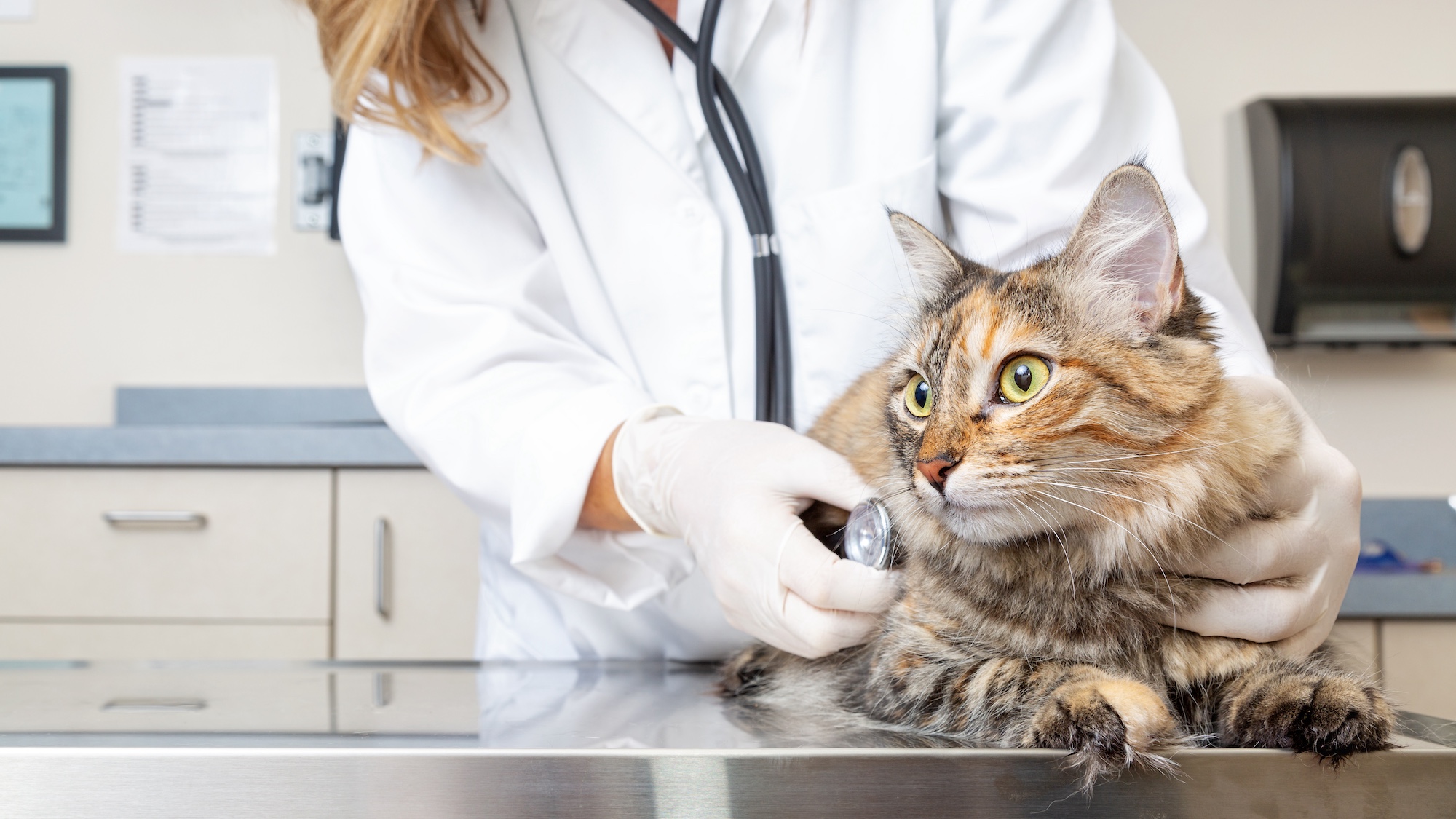
No metal exam table in a fluorescent room of doom.
A home visit can allow us to examine cats who are difficult, fearful, senior, painful, or medically delicate with far less stress.
This can be especially useful for:
- Senior cat exams
- Bloodwork and chronic disease monitoring
- Kidney disease care
- Thyroid disease monitoring
- Arthritis and mobility assessments
- Weight loss investigations
- Quality-of-life assessments
- End-of-life care
- Fearful or hard-to-handle cats
- Multi-cat households where clinic smells cause conflict afterward
And sometimes, we can do more at home than owners expect.
Many cats who are labelled “impossible at the clinic” are not impossible at all.
They are just terrified.
Change the environment, slow things down, use the right handling approach, and suddenly the “spicy cat” becomes a worried cat who can be helped.
The Goal Is Not Just “Getting It Done”
A vet visit should not be judged only by whether the blood sample was collected or the vaccine was given.
We also have to ask:
- What did this cost the cat?
- What did this cost the owner?
- Will this cat be easier or harder to help next time?
Because every traumatic visit teaches the cat something. It teaches them that the carrier predicts fear. That being picked up predicts restraint. That the vet visit is something to fight, flee, or hide from.
Over time, this can create a cycle where care becomes harder and harder.
The cat needs care.
The owner delays care because the cat panics. The cat gets sicker.
The eventual visit becomes more urgent, more stressful, and more intense. That is the cycle we want to break.
A Better Way to Think About Cat Vet Care
Instead of asking:
“How do I force my cat into the carrier?”
Try asking:
“What kind of visit does my cat actually need?”
- Some cats do beautifully with gradual carrier training and a calm clinic visit.
- Some cats need pre-visit medication.
- Some cats need a different carrier.
- Some cats need a quieter appointment time.
- Some cats need a mobile vet.
And for many cats, a home visit can completely change the experience. Sometimes the kindest path is not forcing your cat into the carrier with more determination.
Sometimes the kindest path is asking whether the carrier needs to be part of the plan at all. At 100x Mobile Vet, we help cats receive veterinary care in the place many of them feel safest: home.
Because your cat is not a CKD stage, a thyroid number, a weight-loss mystery, or a “bad patient.”
Your cat is a whole little creature with a nervous system, a memory, and very strong opinions about plastic boxes.
And honestly?
Fair enough.
If your cat hates the carrier, hates the car, or simply needs thoughtful veterinary care with time for a detailed discussion, book a home visit with 100x Mobile Vet.
We bring veterinary care to your cat at home, where we can slow things down, understand the full picture, and build a care plan around the cat in front of us.